
As industries continue to focus on energ
How to Choose Cooling Tower Fill When Re

The global cooling industry is experien
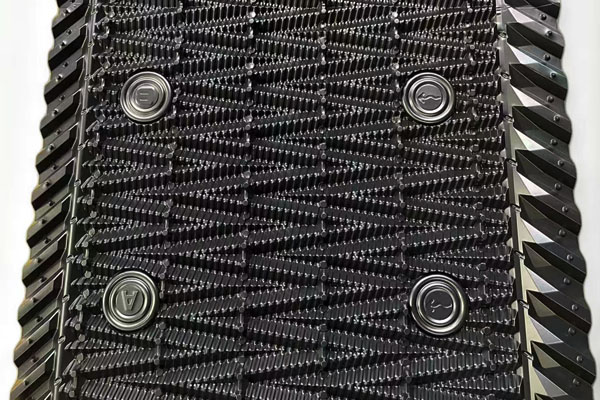
Cooling towers are widely used in commercial HVAC systems, including office buildings, hotels, shopping centers, and district cooling facilities. Inside the tower, Cooling Tower Fill increases the contact area between water and air, making it an important part of the heat rejection process.
For HVAC applications, fill selection should consider more than initial cooling efficiency. Tower configuration, water quality, operating temperature, airflow, and maintenance requirements all affect long-term performance.
Reduced cooling tower performance can increase the load on chillers and other HVAC equipment. Scaling, biological growth, and suspended solids can also reduce effective heat transfer area and restrict airflow through the fill.
A suitable Cooling Tower Media solution should therefore provide stable heat transfer while remaining compatible with the tower's operating conditions.
Counterflow towers move air upward while water flows downward. The fill should match the tower's internal dimensions, water distribution system, and airflow requirements.
Film fill is commonly used in HVAC counterflow applications because its structured surface provides a large air-water contact area within a relatively compact volume.
Crossflow towers introduce air horizontally through the fill section. During replacement, the fill dimensions and installation arrangement should be checked carefully to ensure proper airflow and water distribution.
PVC is widely used in commercial HVAC cooling towers because it provides a practical balance of thermal performance, cost, and serviceability when water temperature and chemistry remain within normal operating ranges.
PP can be considered when higher operating temperatures or more demanding chemical conditions exceed the practical range of standard PVC. Material selection should be based on actual operating conditions rather than price alone.
Water treatment is particularly important for HVAC cooling towers using structured film fill. Scale and biological deposits can reduce wetting and restrict the airflow passages, gradually lowering cooling performance.
Where circulating water contains higher levels of suspended solids or fouling is a significant concern, an open splash structure may be more appropriate. For example, How Does Splash Grid Fill Handle Fouling-Prone Cooling Water explains why splash-type fill can be considered when resistance to blockage is more important than maximum film-fill efficiency.
Replacing the fill does not automatically solve a cooling problem. Water distribution, airflow, fan operation, and water treatment should also be checked when performance remains below expectations.
Film fill is commonly used where water quality can be adequately controlled because it provides efficient air-water contact in a compact structure.
Yes, when the existing fill is damaged, fouled, or no longer suitable for the tower's operating conditions. However, airflow and water distribution should also be checked.
It can be considered when fouling or suspended solids make conventional film fill difficult to maintain. The final choice should depend on water quality and the required thermal performance.
The right Cooling Tower Fill can support stable HVAC cooling performance and reduce maintenance problems, but selection should be based on the complete operating environment. Tower type, water quality, temperature, airflow, and maintenance requirements should all be considered before replacement.
Cooling Tower Fill Media industry updates and technical insights for global clients.
As industries continue to focus on energy efficiency and water conservation, cooling tower fill has

Why Cooling Tower Fill May Not Fit Properly After ReplacementReplacing cooling tower fill sounds str
Get in touch with our team for cooling tower fill media details, quotations, and project technical support.
Chat on WhatsApp