
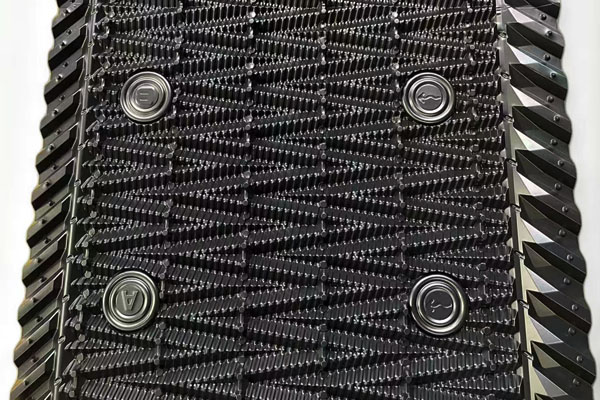
As industries continue to focus on energ
How to Choose Cooling Tower Fill When Re

The global cooling industry is experien
Two cooling towers can operate at a similar water flow rate and still produce noticeably different cooling results. In many cases, the difference is not caused by the pump alone. The internal Cooling Tower Fill configuration can change how effectively water and air interact.
This is especially important when engineers are comparing replacement fill or trying to understand why a tower does not achieve the expected cooling performance after a fill change.
Water flow determines how much water enters the fill, but it does not determine how effectively that water is distributed across the available heat-transfer surface.
Inside film fill, water needs to spread over the sheet surfaces while air passes through the fill structure. If the water distribution is uneven, some sections may receive excessive water while other sections remain poorly wetted.
The result can be lower effective heat transfer even when the measured water flow rate appears correct.
The internal geometry of a fill block influences how water moves from one sheet to another.
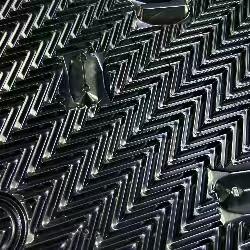
Corrugation pattern, sheet spacing, contact points and flow direction all affect water spreading. A fill that produces a stable water film under one operating condition may behave differently when water loading changes.
This is one reason engineers should not compare two fill products only by their external dimensions.
Water distribution is only half of the process. Airflow through the fill is equally important.
If airflow is uneven, some parts of the fill may receive less air-water contact than others. Excessive airflow resistance can also reduce the amount of air passing through the active heat-transfer area.
For counterflow applications, a product such as 1830mm Width Cooling Tower Fill with 20mm Pitch should therefore be evaluated according to the complete operating arrangement rather than by width and pitch alone.
Different fill structures create different flow paths.
A tightly structured film fill can provide a large contact surface, but the increased interaction between air and water also needs to be balanced against airflow resistance and water quality.
A different structure may provide a more open flow path while producing a different wetting pattern.
Therefore, changing fill design can change the tower's operating characteristics even when the pump flow rate remains unchanged.
The same fill can also behave differently as operating conditions change.
Scale, suspended solids, biological growth and other deposits can gradually alter the effective passage through the fill. The water may still be moving through the tower, but the original air-water contact conditions may no longer exist.
For applications where fouling is a major concern, a different fill structure may need to be evaluated. For example, How Does Splash Grid Fill Handle Fouling-Prone Cooling Water represents a different approach to handling difficult water conditions than a tightly structured film-fill arrangement.
When two fills appear to produce different results under similar water flow, check more than the pump data.
This approach gives a much clearer picture of why cooling performance changes.
For cooling tower fill, the more useful engineering question is how effectively the available water and air are brought into contact inside the fill.
A correct flow rate is necessary, but it does not guarantee uniform wetting, sufficient airflow or effective heat transfer.
That is why fill design should always be evaluated as part of the complete cooling tower operating system rather than as an isolated plastic component.
Cooling Tower Fill Media industry updates and technical insights for global clients.
As industries continue to focus on energy efficiency and water conservation, cooling tower fill has
Why Cooling Tower Fill Can Perform Differently at the Same Water Flow RateTwo cooling towers can ope
Get in touch with our team for cooling tower fill media details, quotations, and project technical support.
Chat on WhatsApp