
As industries continue to focus on energ
How to Choose Cooling Tower Fill When Re

The global cooling industry is experien
In food and beverage facilities, cooling towers are often part of a larger utility system supporting production equipment, refrigeration, or process cooling.
When the cooling tower begins losing capacity, the effect may not be immediately visible at the tower itself.
Instead, operators may notice higher condenser temperatures, reduced cooling margins, or difficulty maintaining process conditions during periods of heavy production.
That is why I treat cooling tower fill condition as part of the plant's maintenance planning rather than an isolated equipment issue.
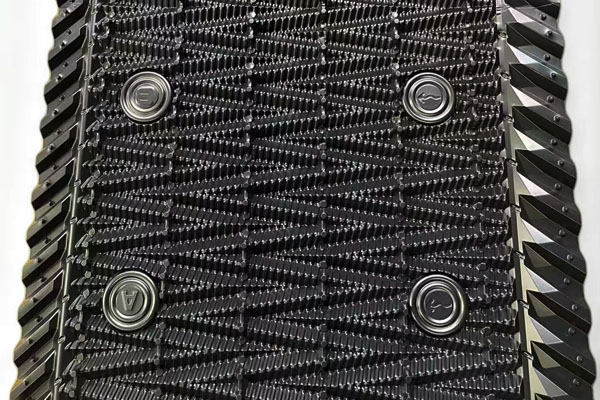
Structured cooling tower fill provides surface area for heat and mass transfer between circulating water and air.
When the internal passages become restricted by deposits or biological growth, airflow and water distribution may be affected.
The tower can then struggle to reject the required heat under demanding operating conditions.
In a production facility, even a moderate loss of cooling capacity may become important when the process is already operating close to its design limits.
Before replacing fouled fill, I would review the circulating water treatment history.
Changes in makeup water quality, chemical treatment, filtration, or blowdown control can influence deposit formation.
If the underlying water treatment problem remains unresolved, new fill may experience similar fouling.
The condition of the media should therefore be evaluated together with the water treatment program.
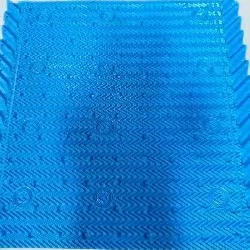
Film fill can be appropriate where water quality is controlled and the tower requires a compact heat transfer arrangement.
For such applications, film fill cooling tower media provides a relevant product category for reviewing the available structure.
However, the actual selection should be based on the required thermal performance and operating water conditions.
A narrow-channel structure should not be selected solely because it offers a compact arrangement.
If the plant repeatedly experiences severe fill blockage, I would investigate whether the media geometry is suitable for the water conditions.
In some cases, improving water treatment or cleaning procedures may be sufficient.
In others, a more open fill structure may deserve consideration.
For example, splash grid fill for fouling-prone cooling water can be evaluated where persistent deposits make narrow passages difficult to maintain.
The thermal capacity and available tower space must be checked before changing the fill type.
Food and beverage plants often have limited maintenance windows.
That makes replacement planning especially important.
Before the shutdown, confirm the fill dimensions, installation arrangement, support condition, and access route.
The required quantity should be calculated from the actual tower layout rather than estimated from the nominal tower size.
For plants with different counterflow tower sections, 305mm and 610mm counterflow fill options may be relevant when checking replacement dimensions.
Cooling tower maintenance also involves biological risk management.
Replacing fill does not remove the need for an appropriate water treatment and monitoring program.
Cleaning, disinfection, and safe maintenance procedures should follow the facility's established requirements and applicable regulations.
The cooling tower should be treated as part of the overall plant utility system.
For food and beverage facilities, I would not wait until the cooling tower loses substantial capacity before examining the fill.
Track the operating temperatures, inspect the media during planned maintenance, and review recurring deposit problems.
If replacement is necessary, select the media according to water conditions, thermal requirements, and the available shutdown window.
That approach helps reduce the risk of unexpected cooling problems during production.
Cooling Tower Fill Media industry updates and technical insights for global clients.
As industries continue to focus on energy efficiency and water conservation, cooling tower fill has
Cooling Tower Maintenance in Food and Beverage Plants: When Fill Fouling Becomes a Production Proble
Get in touch with our team for cooling tower fill media details, quotations, and project technical support.
Chat on WhatsApp