
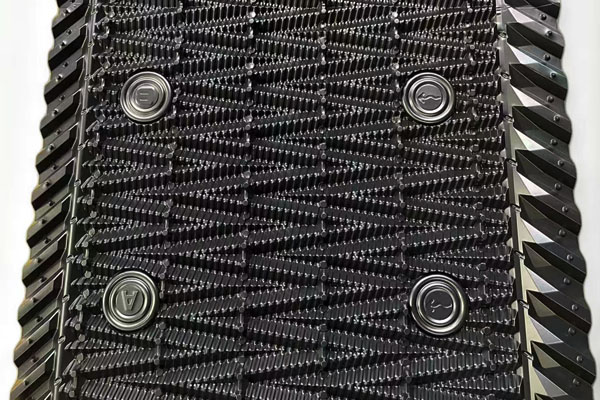
As industries continue to focus on energ
How to Choose Cooling Tower Fill When Re

The global cooling industry is experien
Most engineers focus on thermal performance when choosing fill, but noise is increasingly a deal-breaker—especially for sites near residential areas or with strict environmental permits. The type, material, and installation of cooling tower fill directly influence the overall acoustic signature of the tower. This article breaks down the mechanisms and offers practical tips to keep decibels in check.
In Counterflow Film Fill, water films rupture at sheet edges, creating high-frequency droplets that impact lower layers. In Crossflow Film Fill, the horizontal airflow shears the films, producing a broadband hiss. Splash Grid Fill generates the loudest impact noise because water drops strike grids with significant velocity.
Fill sheets with sharp corrugation angles cause boundary layer separation, creating vortex noise. The tighter the sheet spacing, the higher the turbulent intensity—and the louder the tower.
PVC cooling tower fill media is stiffer and transmits more impact vibration. PP cooling tower fill media has slightly higher damping, reducing resonance at certain frequencies. However, the dominant factor is geometric design rather than material itself.
Modern corrugated fill with staggered drip points can break water into smaller drops at lower velocities, reducing impact energy. Some advanced designs incorporate perforated sheets that create air cushioning, cutting noise by 3~5 dB(A) compared to standard wave patterns.
Higher thermal efficiency usually demands denser fill, but density increases air velocity and water impact—both raising noise. In practice, a 10** increase in fill height can improve efficiency by 8** but may add 2 dB(A). For noise-sensitive projects, consider reducing fill volume by 5** and compensating with larger fan blades.
When ordering custom fill, specify a maximum allowable noise rise. Manufacturers can adjust sheet angle and thickness to shift resonant frequencies away from the human hearing peak (1~4 kHz). Also request foam-filled edges to damp vibration.
A data center replaced its aging PVC film fill with PP film fill featuring a proprietary "micro-rib" surface. The thermal performance remained identical, but the overall A-weighted sound level dropped from 78 to 73 dB(A) – enough to satisfy local night-time limits.
Don't overlook acoustics when selecting fill. Specify noise requirements upfront, choose designs with fragmentation control, and couple with efficient Drift Eliminators that also reduce droplet formation noise. A quieter tower is not only neighbor-friendly but often indicates smoother, more stable operation.
For crossflow replacement applications where width and installation compatibility are important, Wide-width Cross-flow Fill and 16.5 Multi-width Cross-flow Fill provide different dimensional options for project evaluation.
Cooling Tower Fill Media industry updates and technical insights for global clients.
As industries continue to focus on energy efficiency and water conservation, cooling tower fill has
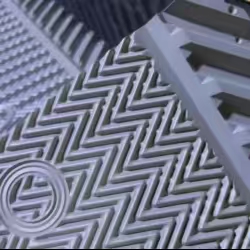
How Can Fill Cutting Affect Airflow Inside a Cooling Tower?During cooling tower fill installation, c
Get in touch with our team for cooling tower fill media details, quotations, and project technical support.
Chat on WhatsApp