
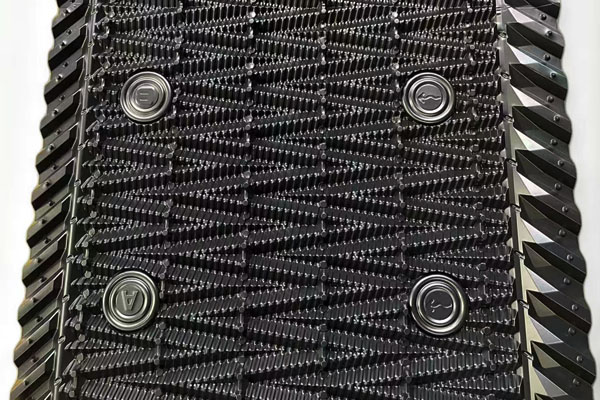
As industries continue to focus on energ
How to Choose Cooling Tower Fill When Re

The global cooling industry is experien
After a Cooling Tower Fill replacement, operators sometimes notice a change in fan sound and immediately assume that the new fill is creating excessive resistance.
That conclusion may be correct in some cases, but sound alone is not enough to diagnose the problem.
When air moves through a cooling tower, the fill, drift eliminators and other internal components all contribute to the airflow path.
A change in sound can therefore come from several different sources.
For towers using film-type fill, the structure and channel geometry can influence the relationship between heat transfer performance and airflow resistance. Film Fill Cooling Tower configurations should therefore be evaluated together with the tower's airflow and operating conditions rather than judged by sound alone.
For a counterflow tower, airflow travels upward through the fill section.
For a crossflow tower, airflow enters horizontally through the fill, so the available fill width and airflow path become particularly important.
In both cases, the condition and installation of other components should also be considered.
For crossflow replacement projects, a 16.5 Multi-width Cross-flow Fill configuration can be evaluated according to the existing tower dimensions and required airflow arrangement.
Drift Eliminators can influence the airflow path. If they have shifted, become damaged or accumulated deposits, they may contribute to changes in airflow behavior.
Fan blade condition, rotation speed, motor settings and mechanical condition can also change the sound of a cooling tower.
This is why a new noise should not automatically be blamed on the Cooling Tower Media.
A better evaluation combines fan condition with airflow, water temperature, water flow and operating load.
If the tower is maintaining the required cooling performance, a small change in operating sound may not indicate a serious problem.
For towers where a larger crossflow fill width is being considered, a Wide-width Cross-flow Fill configuration should also be assessed against the available air path and existing tower geometry.
When customers ask us whether a new Cooling Fill is responsible for a change in tower sound, we prefer to review the complete operating situation rather than make a conclusion from sound alone.
As a Cooling Tower Media manufacturer, we can help evaluate the fill configuration and related components when customers are troubleshooting replacement projects.
A cooling tower is a system, not a single product. If fan noise changes after a fill replacement, check the entire airflow path and operating data before deciding that the new fill is the problem.
Cooling Tower Fill Media industry updates and technical insights for global clients.
As industries continue to focus on energy efficiency and water conservation, cooling tower fill has
Cooling Tower Maintenance in Food and Beverage Plants: When Fill Fouling Becomes a Production Proble
Get in touch with our team for cooling tower fill media details, quotations, and project technical support.
Chat on WhatsApp